Kashmir Origin
Chinar Motif Copper Rice Plate | Hand Engraved Kashmiri Copper Thali
Chinar Motif Copper Rice Plate | Hand Engraved Kashmiri Copper Thali
SKU:
Couldn't load pickup availability
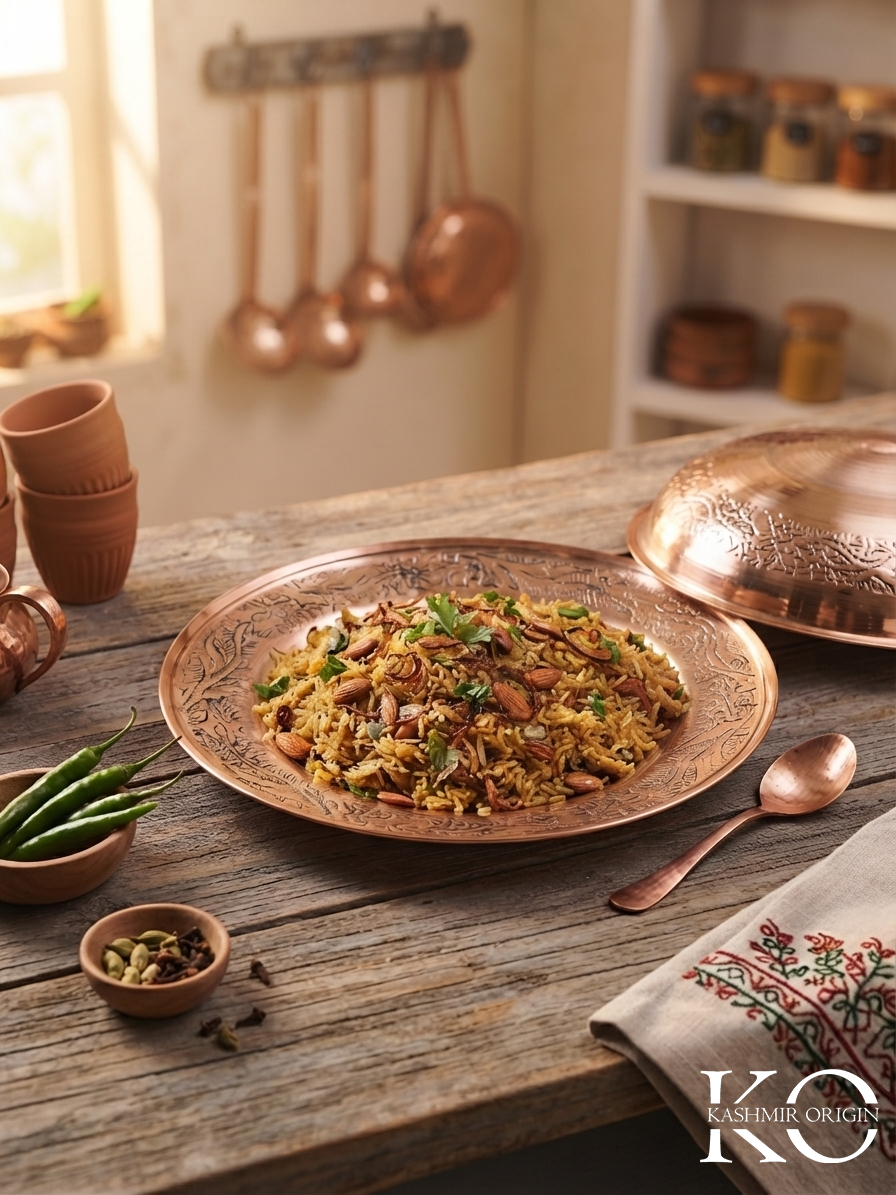
The chinar leaf is Kashmir's signature. Here it is cut into copper, by hand, one leaf at a time.
A rice plate in Kashmir is not a side plate. It is the base of the meal — wide, flat-rimmed, deep enough to hold rice and gravy without spilling. This one carries the chinar motif around the rim, chased with a naqash's chisel rather than pressed by a die.
Why this plate
- Hand-engraved chinar leaf border — Kashmir's most recognisable motif
- Wide rim, deep well — built for rice-and-gravy meals
- Tin-lined interior, safe for daily food use
- Doubles as a wall display piece between meals
- Made in old Srinagar by thathera and naqash artisans
Product Details
| Metal | Copper (Kashmiri Traam) |
| Type of Make | Hand-engraved chinar motif |
| Number of Pieces | 1 |
| Interior | Food-safe tin lined (kalai) |
| Use | Rice, wazwan, thali service, decorative display |
| Care | Hand wash · avoid abrasive scrub on engraving · dry immediately |
| Origin | Srinagar, Kashmir |
FAQs
What is the chinar motif?
The chinar is the Kashmiri plane tree. Its five-pointed leaf appears across Kashmiri crafts — copper, walnut wood, papier mache, and shawls — as the region's defining decorative symbol.
Can I eat off this plate every day?
Yes. The tin lining makes it food safe. Re-tinning (kalai) is recommended every year or two with heavy daily use.
How is hand engraving different from embossing?
Embossing presses a pattern in with a die in seconds. Hand engraving is chiselled line by line and takes hours. Under light, hand engraving shows uneven depth — that is how you tell.
Share