Kashmir Origin
Kashmiri Copper Roti Tawa | Handmade Hand-Beaten Copper Tawa for Home
Kashmiri Copper Roti Tawa | Handmade Hand-Beaten Copper Tawa for Home
SKU:
Couldn't load pickup availability
Handbeaten. In a workshop in old Srinagar. For your kitchen.
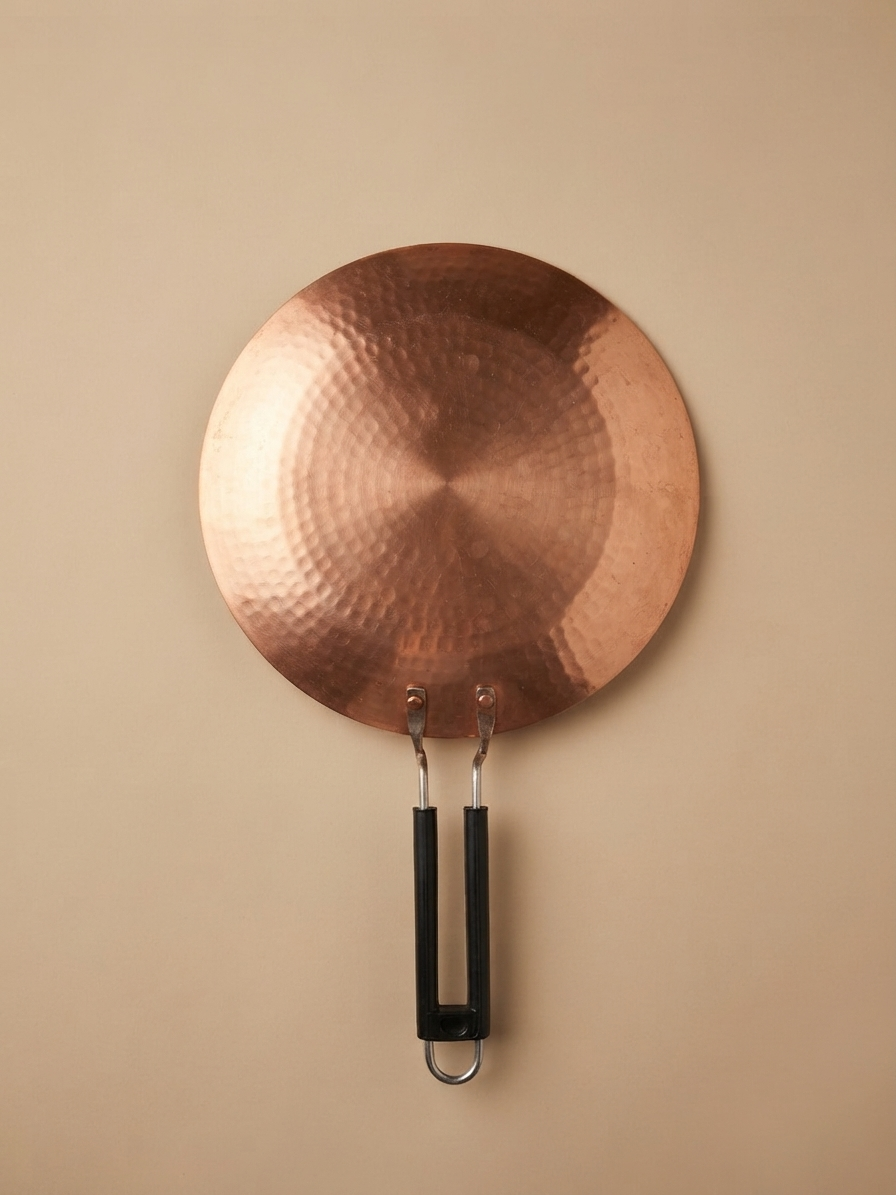
This roti tawa is shaped the way Kashmiri copper has been shaped for centuries — a flat sheet of copper, a hammer, and a thathera who knows exactly how many strikes it takes. No press, no mould. The faint hammer marks across the surface are the maker's signature.
Copper conducts heat faster and more evenly than steel or aluminium, so rotis cook through without the scorched centre and pale edges you get on a cheap tawa. It is heavy in the hand — that weight is what keeps the heat steady when the flame dips.
Why this tawa
- 100% pure copper (Kashmiri traam) — hand-beaten, not machine-pressed
- Even heat distribution — no hot spots, faster cooking
- Made by thathera families in downtown Srinagar
- Naturally antimicrobial surface
- Ages into a warm patina — polish it back any time
- Built to outlive every non-stick pan you will ever buy
Product Details
| Metal | Copper (Kashmiri Traam) |
| Type of Make | Hand-beaten by thathera artisans |
| Number of Pieces | 1 |
| Finish | Natural copper |
| Use | Roti, paratha, dosa, stovetop use |
| Care | Hand wash · tamarind or lemon + salt to restore shine · dry immediately |
| Origin | Srinagar, Kashmir |
| Craft | Thathera copper craft |
FAQs
Is copper safe for cooking rotis?
Yes. Dry-heat cooking on copper — rotis, parathas, dosas — is traditional across India and safe. Avoid cooking highly acidic dishes directly on bare copper for long periods.
How do I clean the tawa?
Hand wash with warm water. To bring back the shine, rub with lemon or tamarind and a pinch of salt, rinse, and dry immediately. Never leave copper wet.
Will it darken over time?
Yes, and that is normal. Copper develops a patina with use. It does not affect performance, and a two-minute lemon-salt scrub restores the original glow.
Is this the same copper used in Kashmiri samovars?
Same metal, same artisan community. Kashmiri thatheras make samovars, tash-naar sets, plates, and tawas from the same hand-beaten copper sheets.
Share